A year-round resident
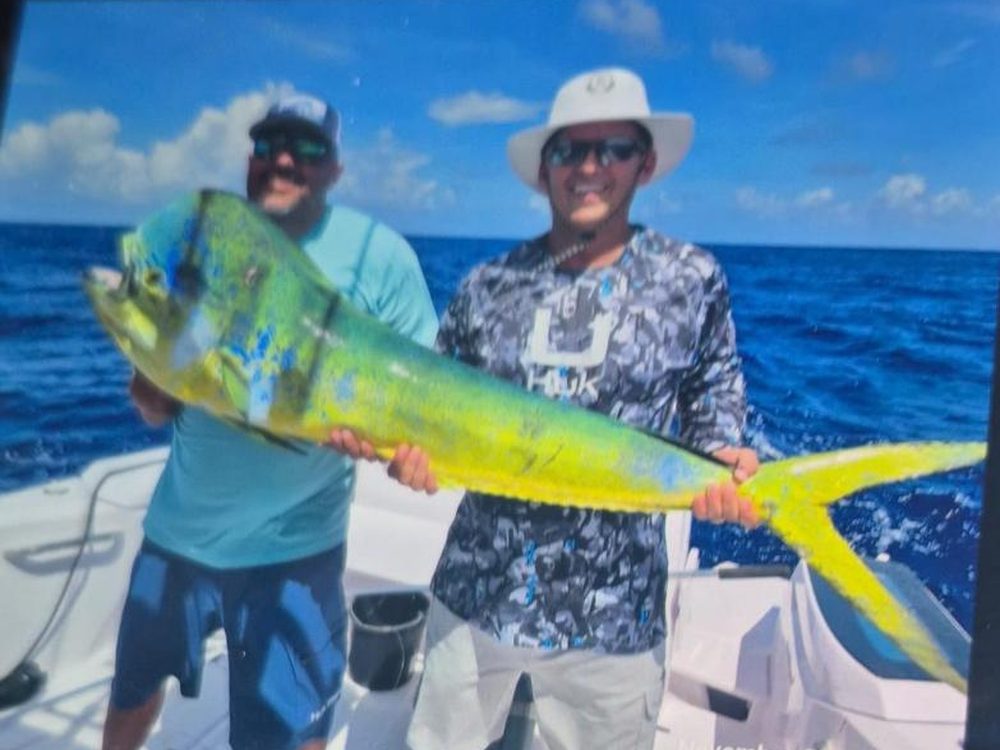
Mahi-mahi (Coryphaena hippurus) — dorado, dolphinfish, same glorious animal — live fast and eat constantly, which makes them ideal charter fish: aggressive, abundant and spectacular. Off Bonaire they're available all twelve months, typically running 5 to 25 kilograms, patrolling the blue water along the drop-off and gathering around anything that floats.
That last habit is the key to hunting them. A patch of drifting weed, a floating pallet, a current line stacked with debris — in open blue water, floating structure is an oasis, and mahi treat it like a cafeteria. Spotting the signs is half the sport.
The most fun you can have on light tackle
Mahi fight like they're being paid for the show — full-body leaps, tail-walks, direction changes that make the reel sing. And they school: hook one and its friends often follow it to the boat, which is when a calm deck turns into happy pandemonium with multiple rods bent.
- Trolling the edge — mahi crash the same spreads we run for tuna and wahoo; on mixed days they're the bonus that keeps coming.
- Working floating structure — casting or dropping bait around weed lines and flotsam when we find it.
- Light tackle by choice — when conditions allow, lighter gear turns every mahi into a highlight reel.
Neon in the water, gold on the plate
Fresh mahi is a different food from anything you've had shipped and thawed — sweet, firm and clean. Cleaning and filleting is included; take your fillets home or, if you're staying at Plaza Resort, hand them to the kitchen and taste what 2-Michelin-star standards do with same-day fish.
Perfect family fish
If your group mixes serious anglers with first-timers or kids, mahi are the great equalizer — frequent action, visual fights and no marathon battles. Pair the trip with the year-round yellowfin and seasonal wahoo and there's something for everyone aboard. Timing questions? The seasons calendar has the honest month-by-month picture.