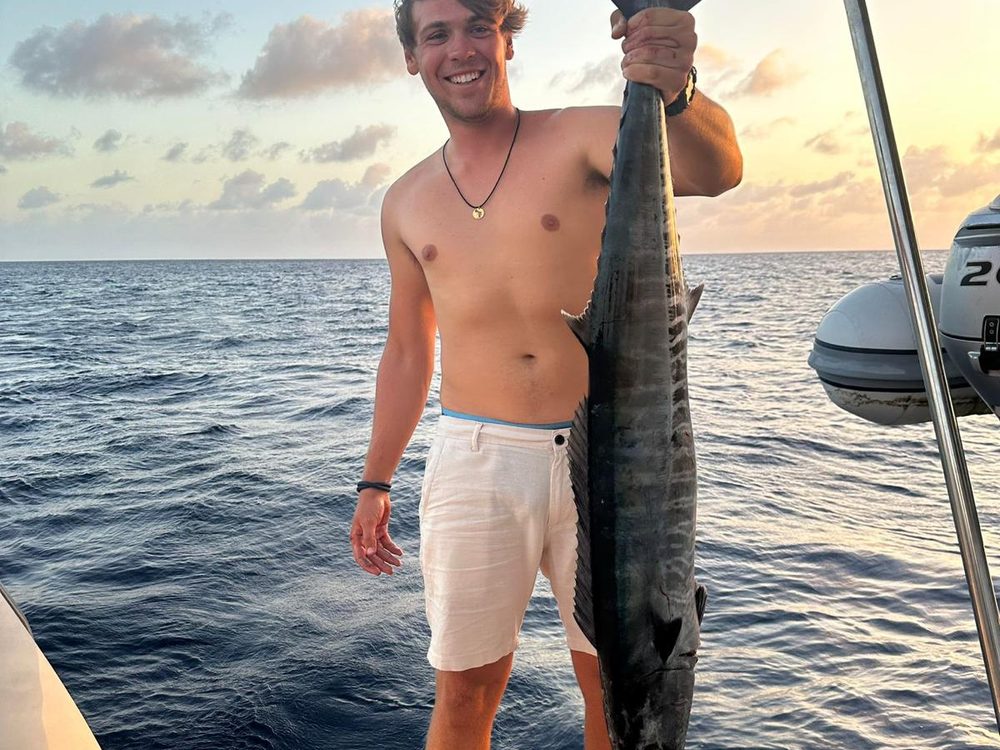
Winter is wahoo season
Wahoo (Acanthocybium solandri) are Bonaire's cool-season headline act. From September through March they stack up along the island's drop-off, ambushing bait from below at absurd speed. Fish here typically run 10 to 40 kilograms — long, lean and armed with a jaw full of scissors, which is why every wahoo rig on board carries wire.
The strike is the whole story with this fish. A wahoo doesn't take a lure, it executes it — line screaming off a reel at highway speed before you've registered the rod bending. Ask anyone who's fished a Bonaire winter morning: you don't forget your first one.
High-speed trolling
Wahoo like their prey fast. We troll the drop-off at higher speeds than for tuna, running lures deep and staggered on wire leaders. The Axopar's pace is a genuine advantage here — covering more edge per hour means finding the pocket of fish faster. When the bite window opens it can be a doubles-and-triples affair: multiple rods down at once, everyone on deck with a job.
- Wire leaders, always — a wahoo's teeth turn mono to confetti.
- Speed and depth — high-speed lures and planers to get down where the fish ambush from.
- The edge, worked hard — current lines and bait marks along the wall between Kralendijk and Washington Slagbaai.
On the table
Wahoo is one of the finest eating fish in the sea — firm, white, clean-flavored, superb grilled or seared. Cleaning and filleting is included in the charter, and a mid-size wahoo produces a startling amount of food. Plaza Resort guests can hand it straight to the kitchen.
Stacking the odds
A winter charter here is rarely a one-species day: wahoo trolling shares water with year-round yellowfin tuna and mahi-mahi, so the spread stays honest even between wahoo strikes. Check the full seasons calendar to plan the timing.