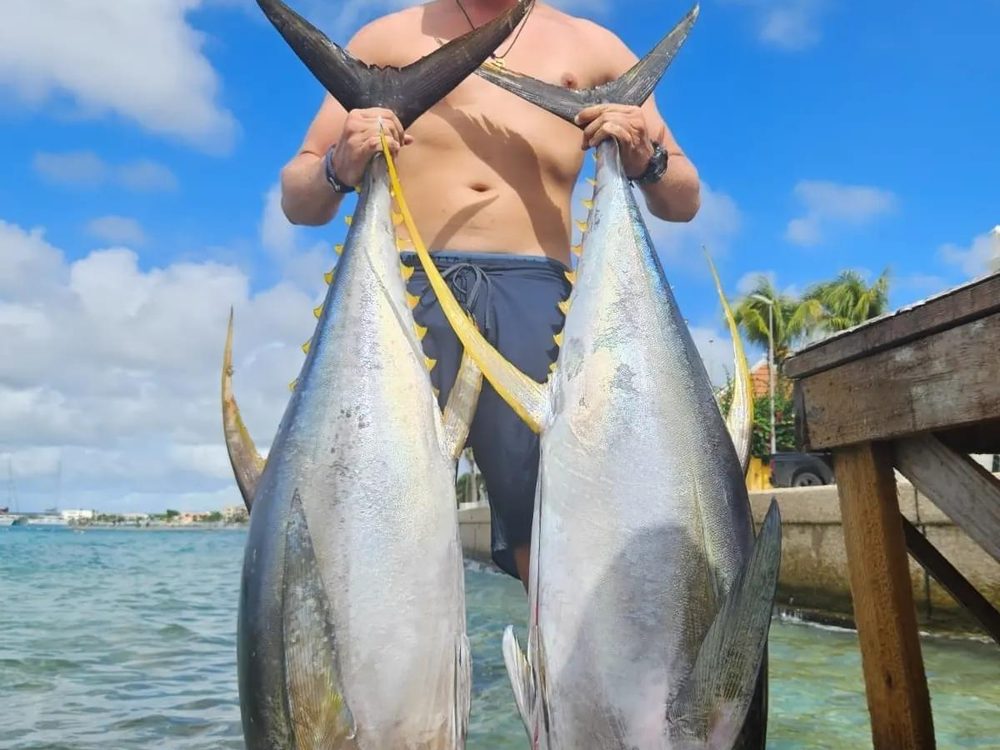
The most consistent yellowfin water in the Caribbean
Yellowfin tuna (Thunnus albacares) are the backbone of Bonaire sportfishing. While many destinations get tuna in pulses — a good month, then nothing — Bonaire's deep wall and steady current keep bait, and therefore yellowfin, in residence all twelve months. Typical fish run 20 to 80 kilograms; the schools that push through in spring can carry fish that make the heavy gear earn its keep.
These are honest, brutal fighters. A yellowfin's first run bends the rod flat and empties line at a pace nothing on land prepares you for — and then it does it again. Landing one is the moment most first-time charter guests become repeat charter guests.
How we catch them
- Trolling the drop-off — covering the edge where bait stacks; most days start here.
- Jigging on station — when we mark fish deep, metal jigs dropped below the boat produce violent results.
- Live bait at the FADs — the trump card for bigger, warier fish holding around structure.
Early light is prime time — the signature charter's morning departure exists because the tuna bite is sharpest before the sun gets high. The Quick MC2 stabilizer earns its money here too: fighting a tuna from a rolling deck is exhausting; fighting one from a stable platform is sport.
From gaff to table
Yellowfin from these waters is sashimi-grade, and we treat it that way — bled, iced and handled properly from the moment it hits the deck. Cleaning and filleting is included, and the fillets are yours. 2-Michelin-star chef René Brienen called our yellowfin "the cleanest, freshest we've worked with in the Caribbean" — and if you're staying at Plaza Resort, his kitchen or our sushi chef will turn your fish into dinner the same day.
When to come
There's no wrong month for yellowfin here — they're residents, not visitors. If you want to stack the odds for a mixed bag, pair them with wahoo between September and March, or with billfish between April and October. See the full Bonaire fishing calendar for the month-by-month picture.